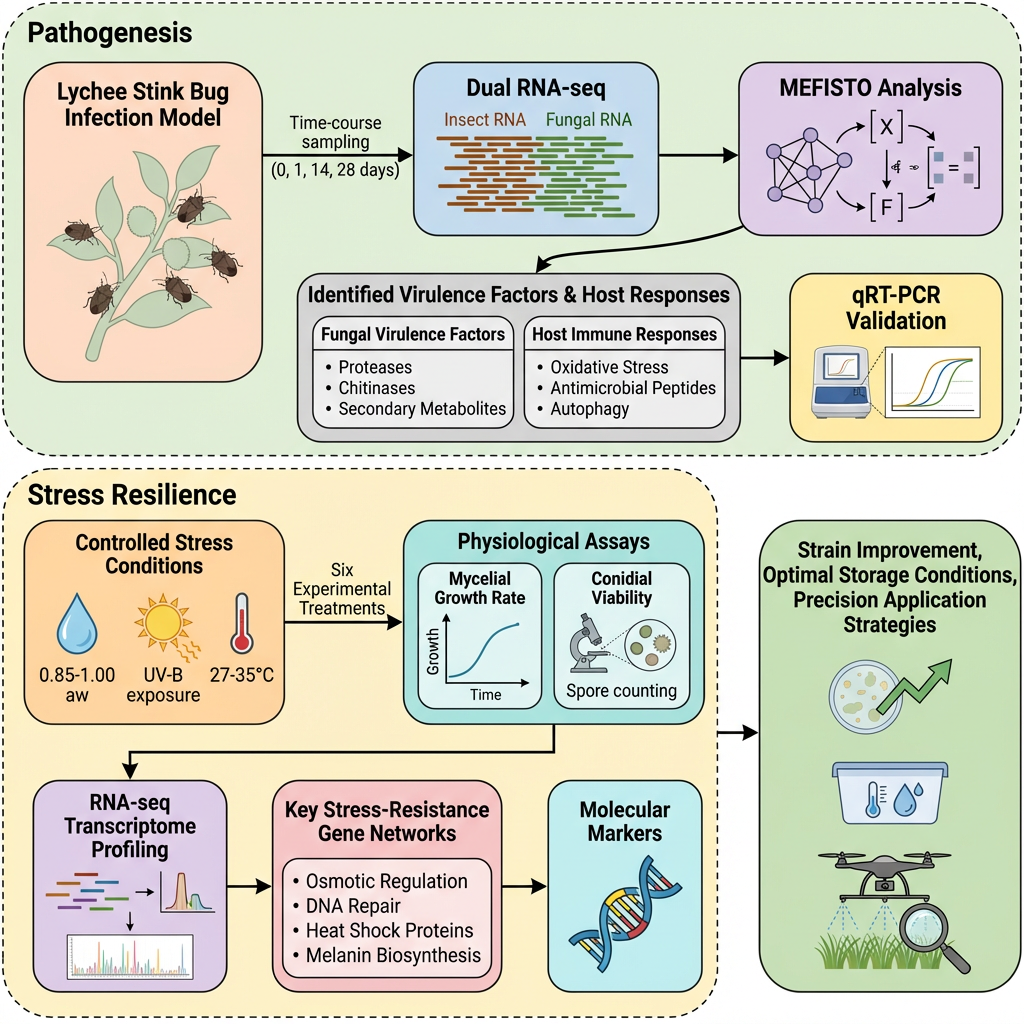
The lychee stink bug (Tessaratoma papillosa) causes huge yield losses in lychee and longan orchards across Taiwan and Southeast Asia, yet sustainable alternatives to chemical pesticides remain limited.
Our research uses Purpureocillium takamizusanense TCTeb01 — a locally isolated entomopathogenic fungus with demonstrated field efficacy and confirmed biosafety — as a model system to develop molecular-level understanding of fungal biocontrol. Through dual RNA-seq and MEFISTO temporal factor analysis, we are decoding the dynamic molecular interplay between fungal virulence strategies and insect immune defenses across the infection process, with candidate genes functionally validated via qRT-PCR. In parallel, we systematically assess fungal resilience under field-relevant environmental pressures — reduced water activity, UV-B radiation, and temperature extremes — integrating physiological assays with transcriptome profiling to uncover stress-resistance gene networks and establish molecular markers for strain improvement and precision application.
Because this pipeline addresses both pathogenesis and environmental durability, the resulting framework is directly transferable to other entomopathogenic systems targeting agricultural pests beyond the lychee stink bug.